
Researchers from Drexel University, in collaboration with geotechnical engineering consultant Seaflower Consulting Services, have developed a promising technique to identify lead water lines without excavation. This innovation could significantly accelerate the removal of lead pipes, a major public health concern.
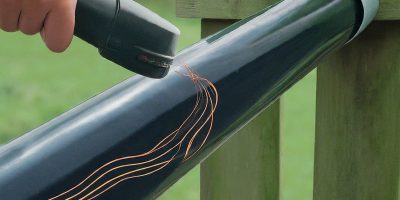
The technique relies on a fundamental principle: different materials produce distinct sounds when struck. By striking an accessible section of a buried pipe and analyzing the sound waves traveling to the surface, the researchers can determine the pipe’s composition.
This method offers several advantages over traditional approaches:
* *Non-invasive:* Unlike excavation or home entry, this method avoids disrupting residents or damaging property.
* *Faster and more efficient:* It can rapidly identify lead pipes, accelerating the replacement process.
* *Cost-effective:* Eliminating unnecessary excavation reduces costs for both utilities and homeowners.
The research, published in the Journal of Nondestructive Evaluation [Link to the journal article], demonstrates the feasibility of this approach. The team successfully differentiated between lead, copper, steel, and PVC pipes by analyzing the speed and characteristics of the sound waves generated upon impact.
While further testing is needed, this innovation holds immense promise for tackling the nationwide issue of lead water lines. It could revolutionize the way utilities locate and replace lead pipes, ultimately contributing to safer drinking water for millions of Americans.